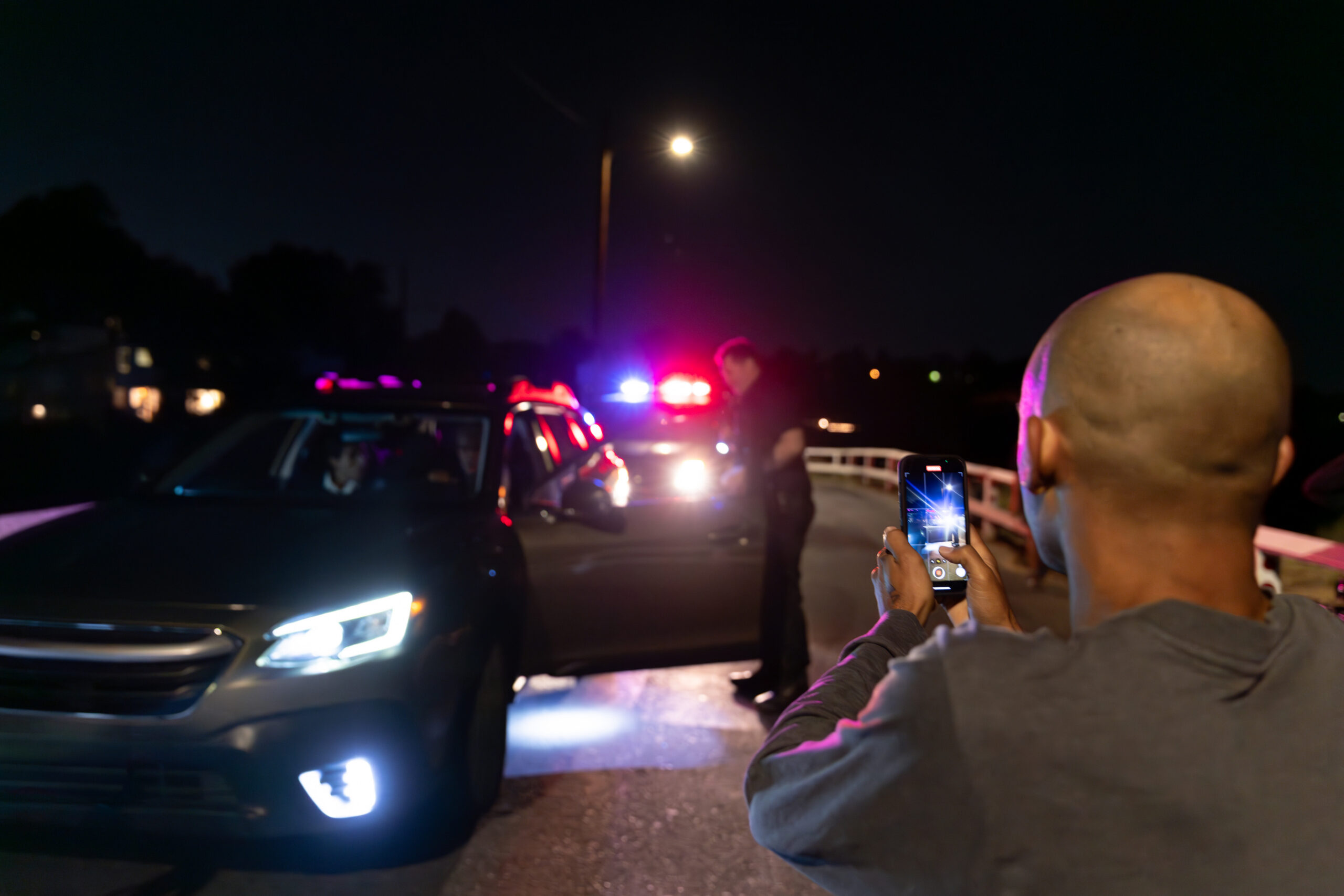
Albuquerque residents pull out their phones at traffic stops, protests, and street encounters every day. The question of whether police can legally arrest you for doing so is not abstract — it has real consequences for real people across New Mexico. The short answer is no, not legally. But the full picture is more complicated, and knowing exactly where the law stands could matter the moment an officer tells you to put your phone away.
Do You Have the Right to Record Police in New Mexico?
Yes. Recording police in public is a First Amendment right recognized by federal courts, including those covering New Mexico.
The right to record police officers performing their duties in public spaces is grounded in the First Amendment to the U.S. Constitution. Federal circuit courts across the country, including the Tenth Circuit, which covers New Mexico, have consistently recognized that filming law enforcement in public is a protected form of free expression and newsgathering.
The underlying principle is straightforward: government officials exercising authority in public spaces are subject to public scrutiny. A police officer making an arrest on an Albuquerque sidewalk, conducting a traffic stop on I-25, or using force during a protest is acting in an official capacity — and the public has a constitutionally protected interest in documenting that conduct.
New Mexico’s wiretapping statute, NMSA 1978, Section 30-12-1, requires one-party consent for telephone and electronic communications, and state courts have consistently held that it does not prohibit recording in-person, face-to-face interactions in public. Recording an encounter you are part of, or a public interaction you are witnessing, does not make you a criminal.
When Can Officers Legally Intervene?
Officers can lawfully ask you to move if you are obstructing them, but they cannot seize your phone or arrest you simply for recording.
Your right to record is not unlimited. Officers retain the authority to manage public safety, and there are situations where lawful restrictions apply. Courts have recognized that police can ask bystanders to step back if they are physically interfering with an arrest or emergency response. What they cannot do is use your camera as justification for an arrest on its own.
Arrests based solely on a recording — dressed up as charges such as obstruction, disorderly conduct, or failure to obey — are the most common flashpoints in these encounters. New Mexico’s obstruction statute, NMSA 1978, Section 30-22-1, is typically applied by courts and prosecutors to require more than mere presence or peaceful filming to constitute illegal interference. Standing nearby and filming does not meet that threshold.
If an officer orders you to stop recording and you comply under threat of arrest, that does not mean the order was legal. It means the situation felt dangerous enough that compliance seemed necessary. Those are very different things.
What Should You Do If an Officer Tells You to Stop Recording?
Stay calm, stay put if you are in a lawful location, and clearly but calmly state that you are exercising your First Amendment right to record.
De-escalation matters here. Asserting your rights loudly or in a confrontational way rarely ends well, even when you are legally in the right. If an officer tells you to stop, you can say something like: “I understand your concern. I’m exercising my First Amendment right to record police activity in a public space.” Then continue recording if it is safe to do so.
Do not physically resist if an officer tries to take your phone. Resisting could lead to additional charges and physical harm. Courts can address the unconstitutional seizure later — a civil rights attorney can help you pursue remedies after the fact. Your physical safety in the moment comes first.
Document everything you can:
- The officer’s name and badge number, if visible
- The patrol car number
- Any witnesses present
- The exact location and time
If your phone is confiscated, police generally need a warrant to search its contents under Riley v. California, 573 U.S. 373 (2014), a U.S. Supreme Court ruling that squarely addresses digital privacy during arrests.
What Happens If You Are Arrested for Recording?
An arrest for recording police in a public space may violate your First and Fourth Amendment rights and form the basis of a civil rights claim.
Being arrested does not mean you did something wrong. If officers retaliate against you for recording them — through arrest, detention, or confiscation of your device — those actions may be actionable under 42 U.S.C. Section 1983, the federal civil rights statute that allows individuals to sue government officials for constitutional violations.
Successful claims in this area have resulted in courts finding that officers lacked probable cause, that arrests were retaliatory, and that departments failed to train officers on First Amendment rights. New Mexico courts and federal courts in the Tenth Circuit have addressed police misconduct claims with increasing rigor, particularly in the wake of heightened public attention to law enforcement accountability in cities like Albuquerque.
The New Mexico Civil Rights Act, enacted in 2021, provides an additional layer of protection. Unlike federal Section 1983 claims, the New Mexico Civil Rights Act — codified at NMSA 1978, Sections 41-4A-1 through 41-4A-13 — eliminates qualified immunity as a defense in state court. That matters enormously. It means that officers in New Mexico cannot avoid accountability simply by arguing that the unconstitutionality of their conduct was not clearly established at the time.
Protecting Your Rights After an Unlawful Arrest
If you were arrested for recording police in Albuquerque or anywhere in New Mexico, the circumstances of that arrest deserve serious legal review. Kennedy Law Firm focuses on civil rights cases, including those involving unlawful detention, excessive force, and First Amendment retaliation by law enforcement. To discuss what happened and understand your options, contact us or call our Albuquerque office at 505-588-5716.